
There’s something downright magical about the smell of French toast sizzling on a Sunday morning. It’s that golden, cinnamon-sweet scent that pulls everyone out of bed and straight into the kitchen. French toast is one of those comfort foods that feels special without requiring a trip to the store or a culinary degree. It’s simple, it’s fast, and chances are, you already have everything you need—eggs, milk, bread, a touch of vanilla, and a good attitude.
This recipe is for anyone who wants a no-fuss breakfast that feels like a warm hug on a plate. Whether you’re cooking for your family, impressing a guest, or just treating yourself to something better than cereal, this one’s a guaranteed win. It’s budget-friendly, kid-approved, and endlessly customizable. Add berries, syrup, a dusting of powdered sugar—or keep it classic and let the buttery crisp edges do all the talking. So fire up the skillet, pour yourself a cup of coffee, and let’s make something that turns an ordinary morning into a little celebration.
Time Estimate
- Prep time: 5 minutes
- Cook time: 10 minutes
- Total time: 15 minutes
Cost Estimate
- Serves 4
- Approximate total cost: $4.50 – $6.00
- Cost per serving: $1.25 – $1.50
Note: Based on average U.S. grocery prices for 2025.
Ingredients (For 8 slices of French toast)
- 8 slices thick-cut bread (like brioche, challah, or Texas toast)
- 4 large eggs
- 1 cup milk (whole milk preferred, but any kind works)
- 1 tsp vanilla extract
- 1 tsp ground cinnamon
- 1 pinch salt
- 1 tbsp butter (for the pan)
- Optional toppings: maple syrup, powdered sugar, fresh berries, or whipped cream
Tools You’ll Need
- Mixing bowl
- Whisk or fork
- Skillet or griddle
- Spatula
- Measuring spoons
- Shallow dish or pie plate (for dipping the bread)
Step 1: Mix Up the Batter
Grab yourself a medium-sized mixing bowl—the kind that gives you a little elbow room—and crack in those eggs like you mean it. This is where the magic starts. Once the eggs are in, pour in the milk (whole milk gives the richest flavor, but anything you’ve got in the fridge will work just fine). Add the vanilla for that cozy, bakery-style aroma, then sprinkle in the cinnamon and toss in a small pinch of salt to balance the sweetness.
Now grab a whisk or a sturdy fork and get to mixing. You want that mixture smooth, well-blended, and just a little bit frothy on top—that’s how you know it’s ready. If the cinnamon clumps at first, don’t worry—it’ll blend in with a little extra whisking. This isn’t the time to rush. Give it 30 seconds of your full attention, and you’ll end up with a batter that soaks into the bread like a dream.
Tip from experience: If your cinnamon is clumping up, sprinkle it evenly over the surface before whisking.

Step 2: Dip That Bread
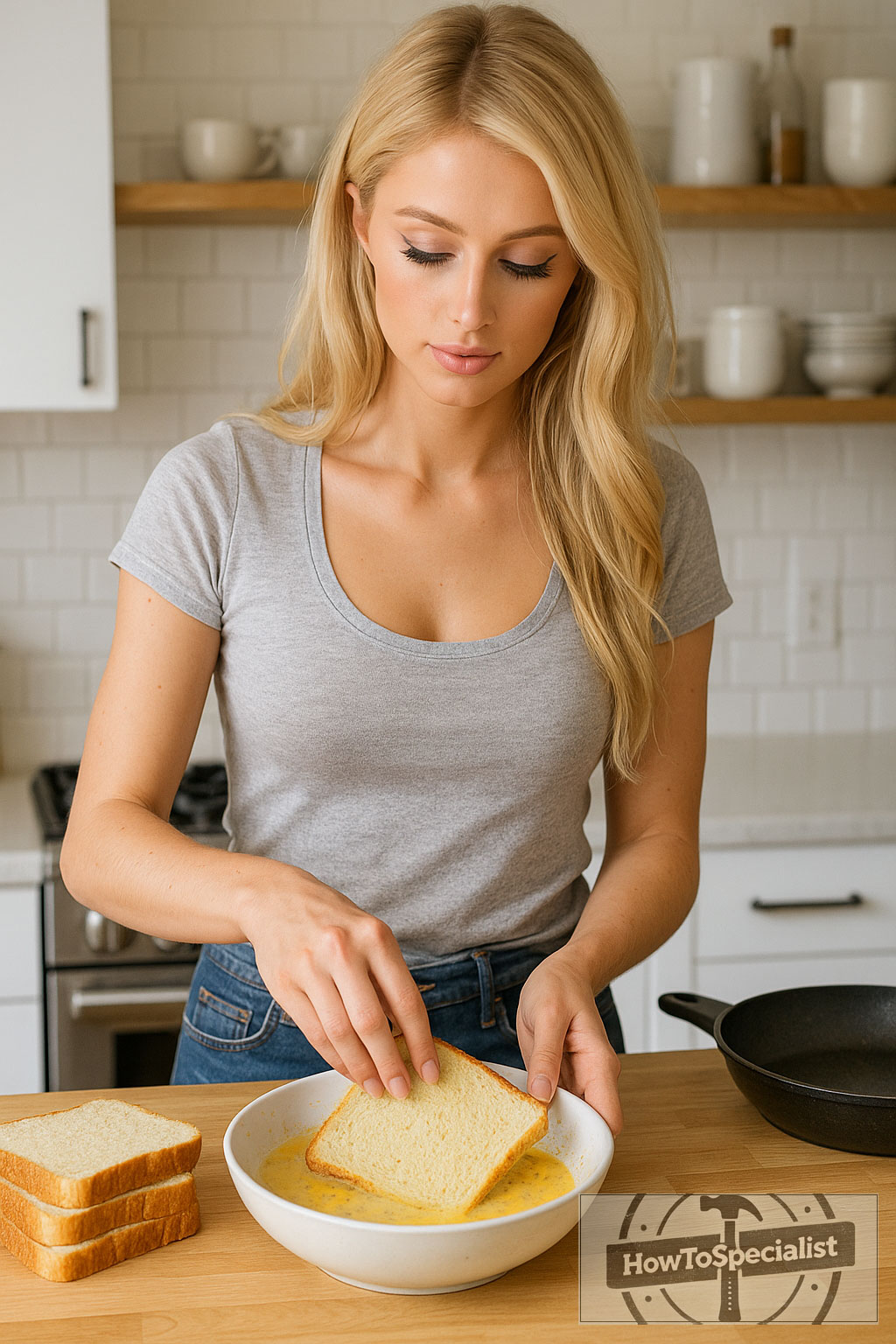
Once your egg mixture is good and frothy, pour it into a shallow dish—something like a pie plate or a small casserole dish works great here. You want enough surface area to lay the bread flat so it can soak up all that rich, custardy goodness.
Now, take your slices of bread—thick-cut is best, like brioche, challah, or even day-old sandwich bread—and gently dip each one into the mixture. Give it about 8 to 10 seconds per side, just enough time to absorb the flavors without getting soggy or falling apart. The goal is soft and saturated, not dripping and mushy.
If your bread is too fresh and starts to break, don’t be afraid to give it a little less time or switch to a firmer loaf. And if the slices are super thick, you can let them sit just a touch longer. You’ll get the hang of the balance after the first slice or two. This step is where the flavor soaks in, so don’t skip the love here.
Pro tip: Day-old bread works best because it holds up better and absorbs more of the good stuff.
Step 3: Heat & Butter the Pan
Place your skillet or griddle on medium heat—it’s tempting to crank it up and get things moving fast, but trust me, medium is the sweet spot. Too hot and you’ll burn the outside before the inside has a chance to cook through. Too low and you’ll end up with limp, soggy slices. We’re going for golden and crisp here.
Once your pan is warming up, drop in a small pat of butter—about a tablespoon should do the trick. Swirl it around until the entire surface is coated. You don’t need a pool, just enough to prevent sticking and add that rich, buttery flavor that makes French toast sing. Wait until the butter starts to sizzle gently and smells like something good is about to happen. That’s your cue—it’s go time. If the butter browns too quickly or starts to smoke, dial the heat back a notch. We want a steady, even cook that builds that perfect golden crust without rushing it.
Step 4: Cook to Golden Perfection
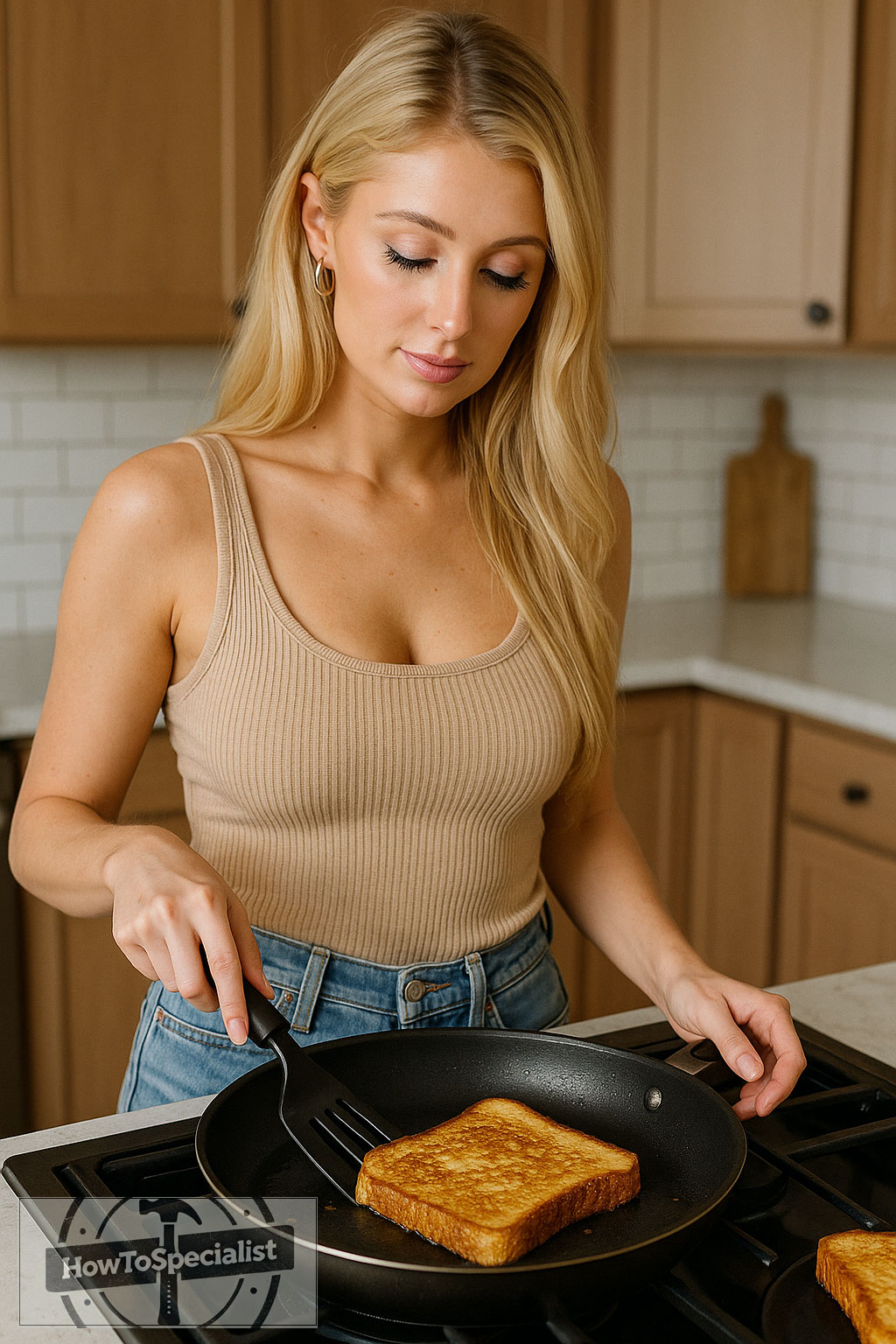
Carefully lay 2 to 3 slices of your soaked bread onto the hot skillet or griddle—how many depends on the size of your pan, but don’t overcrowd it. Give each slice some breathing room so the heat can circulate and crisp up those edges just right. You should hear a soft sizzle the moment they hit the pan. That’s the sound of flavor being built.
Let each slice cook undisturbed for about 3 to 4 minutes on the first side. You’re looking for that perfect golden brown—crisp on the outside, still tender inside. Resist the urge to press down or move them too early. When they’re ready to flip, they’ll lift easily with your spatula and have a nice, toasty surface.
Flip each piece gently and let the second side cook for another 3 to 4 minutes. If your slices are on the thicker side or extra soaked, you might need another minute to make sure the center’s fully set. Once a batch is done, transfer the toast to a warm plate or a low oven (around 200°F) to keep it cozy while you work through the rest. Don’t forget to add a little more butter to the pan between batches to keep things from sticking and to maintain that buttery flavor we’re after. Keep going until every slice has had its moment in the pan.

Step 5: Plate and Serve
Once all your slices are cooked to golden perfection, go ahead and stack ‘em up while they’re still warm—there’s just something satisfying about that tall, toasty tower of French toast. Serve them right away for the best texture: crisp edges with a soft, custardy center.
Now comes the fun part—toppings. Drizzle generously with real maple syrup (the good stuff, if you’ve got it), and don’t be shy with a handful of fresh berries—strawberries, blueberries, raspberries, whatever’s in season. A light dusting of powdered sugar adds that café-style touch, and if you really want to spoil someone—or yourself—add a big ol’ dollop of whipped cream right on top.
You can even take it further: a sprinkle of chopped nuts, a spoonful of Greek yogurt, or a drizzle of warm nut butter turns this into something next-level. However you dress it up, this is the kind of breakfast that turns an ordinary morning into something worth remembering. So gather around the table, dig in, and enjoy every bite.
Nutritional Breakdown (Per Slice, without toppings)
| Nutrient | Amount |
|---|---|
| Calories | 170 kcal |
| Protein | 6g |
| Carbohydrates | 22g |
| Fat | 6g |
| Saturated Fat | 2g |
| Sugar | 4g |
| Sodium | 190mg |
| Fiber | 1g |
Based on whole milk and white bread.
My 5 absolute best tips for making French toast that’s golden, flavorful, and downright irresistible:
1. Use Thick, Slightly Stale Bread
The bread makes or breaks your French toast. Go for thick-cut slices—like brioche, challah, or Texas toast—and if they’re a day or two old, even better. Stale bread holds its shape better and soaks up the custard without falling apart. Fresh bread tends to get mushy real fast.
2. Mix Your Custard Thoroughly
Whisk that egg mixture until it’s completely smooth and slightly frothy. Undermixing leads to streaky, uneven coating, and no one wants scrambled egg bits on their toast. A good, well-emulsified custard means every bite is consistent and flavorful.
3. Don’t Rush the Soak
Give each slice about 8–10 seconds per side to absorb the custard—but don’t just dunk and go. Press gently so the bread drinks it in evenly. The goal is to saturate the inside without making it fall apart. It’s a small detail that makes a big difference in texture.
4. Cook Low and Slow
Medium heat is your best friend. High heat will burn the outside before the inside sets. Take your time—3 to 4 minutes per side gives you that golden crust while keeping the inside soft and custardy. If your toast is browning too quickly, drop the heat a notch.
5. Keep It Warm in the Oven
Making a big batch? Preheat your oven to 200°F (about 95°C) and place finished slices on a wire rack over a baking sheet. This keeps them warm and crispy while you finish the rest—no soggy toast here.

Final Thoughts
French toast is one of those recipes that proves you don’t need anything fancy to eat well. You don’t need specialty tools or gourmet ingredients—just a few basics, a little time, and a hot skillet. It’s easy, affordable, and always a crowd-pleaser, whether you’re feeding a house full of hungry kids or just making breakfast for one. It’s the kind of meal that feels nostalgic, like something your grandma would’ve made on a lazy Sunday morning—warm, simple, and made with love.
You can dress it up or keep it classic. Toss on some berries, drizzle it with maple syrup, or even layer it with peanut butter and bananas if you’re feeling adventurous. You can make it dairy-free, gluten-free, or stuff it with cream cheese and jam for something extra. Whatever route you take, the end result is the same: comfort on a plate. So go ahead—grab that whisk, fire up the stove, and make something that brings a little joy to your morning. French toast doesn’t just fill your belly—it feeds your soul.